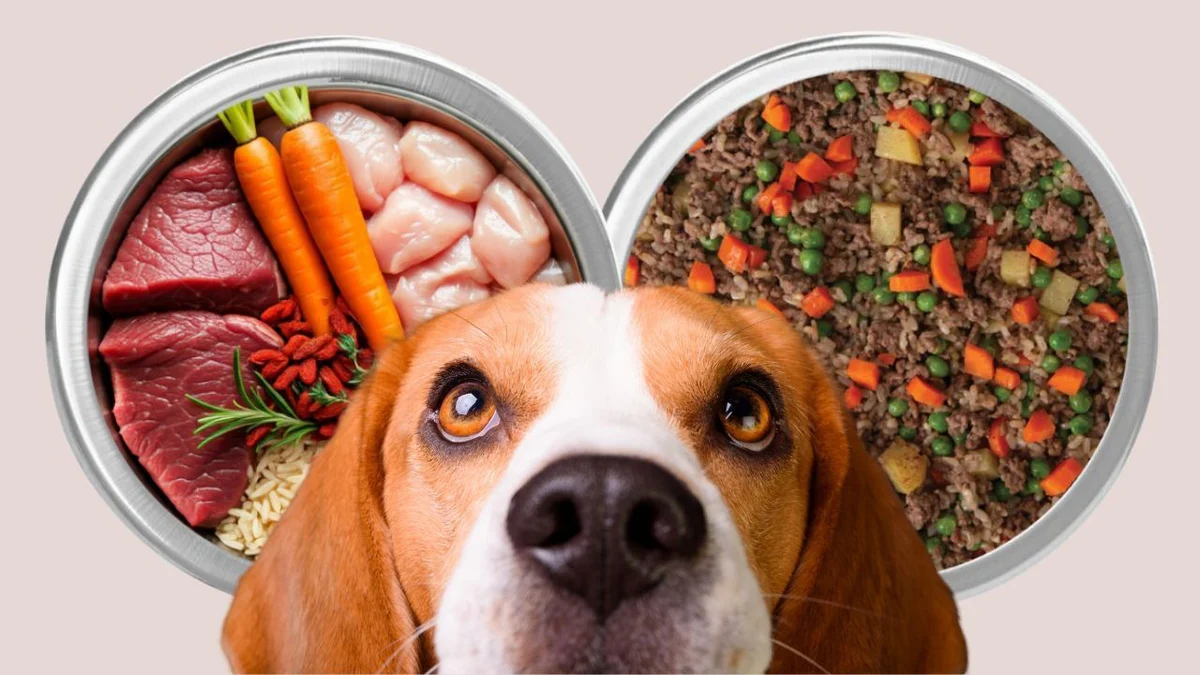
Over the past few years, the phrase “human-grade dog food” has become increasingly common in India’s premium pet food conversation. It appears on brand websites, subscription meal pages, packaging, and social media messaging.
For many pet parents, the phrase sounds reassuring. It suggests cleaner sourcing, more familiar ingredients, and food that feels closer to what one might cook at home.
But in India, the term needs to be understood carefully. The official materials reviewed for this article point clearly to Indian standards for pet food quality, especially IS 11968:2019, but do not separately establish “human-grade” as a clearly defined legal category in the way consumers often imagine it. 12
How Pet Food Is Regulated in India
In the Indian context, one of the most relevant formal standards is IS 11968:2019 — Pet Food for Dogs and Cats — Specification, which appears in BIS materials and committee references. 12
This matters because it gives pet food discussions in India a standards-based backbone. Instead of asking only whether a food sounds premium, the better question is whether it reflects strong practice around:
- ingredient safety
- manufacturing hygiene
- labeling clarity
- nutritional adequacy
What “Human-Grade” Usually Implies in India
In Indian pet food marketing, the phrase is typically used to suggest that ingredients come from supply chains familiar to human kitchens — for example, fresh poultry, vegetables, rice, or other ingredients a household might also buy for cooking.
In that sense, the phrase often communicates a sourcing philosophy: recognizable ingredients, cleaner handling, and less industrial distance between the kitchen and the bowl.
But a premium claim should not be read in isolation. The more useful questions are:
- Where are the ingredients sourced from?
- How are they stored and handled?
- What hygiene standards are followed?
- Is the final meal nutritionally appropriate for dogs?
Examples That Make the Distinction Clearer
Example 1: A fresh meal kitchen
A business may use fresh chicken from a poultry supplier, vegetables from a produce market, and rice from a standard food supplier. The meals may be cooked in small batches and refrigerated. In ordinary conversation, many Indian pet parents would likely understand such a meal as “human-grade” because the ingredients resemble what enters a home kitchen.
Example 2: A conventional industrial product
Another product may be built around rendered meals, composite feed ingredients, and long-shelf-life processing. That does not automatically make it unsafe or nutritionally poor, but it does place it in a very different mental category from a fresh or home-style food.
The difference, then, is not just the label. It is the relationship between ingredient familiarity, processing method, and trust.
Why the Term Became Popular
The popularity of “human-grade” in India reflects broader changes in pet parenting:
- more urban pet households
- greater attention to ingredient lists
- higher interest in fresh and minimally processed food
- a stronger tendency to view dogs as family members
As these expectations rise, brands naturally move toward language that signals transparency, trust, and care. “Human-grade” has become one of those signals.
Why Processing Still Matters
Ingredient sourcing is only part of the story. Processing also shapes what the final food becomes.
Dry kibble typically depends on large-scale processing methods and very low moisture levels. Fresh meals, by contrast, often retain more moisture and resemble home-cooked food more closely. That does not make one automatically superior in every context, but it does mean the production model matters.
For a pet parent, a useful mental model is this: a food should be judged not only by what goes into it, but also by what happens to those ingredients before the dog eats them.
What Pet Parents Should Evaluate Beyond the Label
Instead of relying only on the phrase “human-grade,” evaluate a food through a wider lens:
- Are the ingredients clearly identifiable?
- Is the brand transparent about sourcing?
- Does the food look like something made with intent, not just marketed with intent?
- Is the nutritional logic of the food explained responsibly?
- Does the brand communicate hygiene, preparation method, and suitability honestly?
In the Indian context, these questions are often more valuable than the claim itself.
Frequently Asked Questions
What does human-grade dog food mean in India?
In Indian usage, it usually suggests that ingredients resemble those used in human cooking or come from human food supply chains. In the official materials reviewed here, it does not appear as a separately defined BIS or FSSAI legal category. 14
Who regulates pet food quality in India?
BIS materials identify IS 11968:2019 as a relevant pet food standard for dogs and cats. Depending on the business model, broader food-safety, labeling, licensing, and import requirements may also matter. 124
Is all fresh dog food in India human-grade?
No. Freshness and home-style preparation are not the same thing as a formally standardized legal category called human-grade. Pet parents should examine sourcing, hygiene, transparency, and nutritional adequacy.
What matters more than the label?
Ingredient transparency, preparation method, nutritional balance, and brand credibility often tell you more than a single marketing phrase.
References
-
Bureau of Indian Standards annual report listing IS 11968:2019 Pet Food for Dogs and Cats — Specification
BIS Annual Report 2019–20 (PDF) -
BIS committee page referencing review/preparation work related to IS 11968:2019
BIS Technical Committee / Working Group Details -
FSSAI official website for food-safety regulatory context in India
FSSAI Official Website -
Industry analysis discussing how IS 11968:2019 functions as a voluntary but foundational standard in India’s pet food sector
IS 11968:2019 – Indian Pet Food Regulation