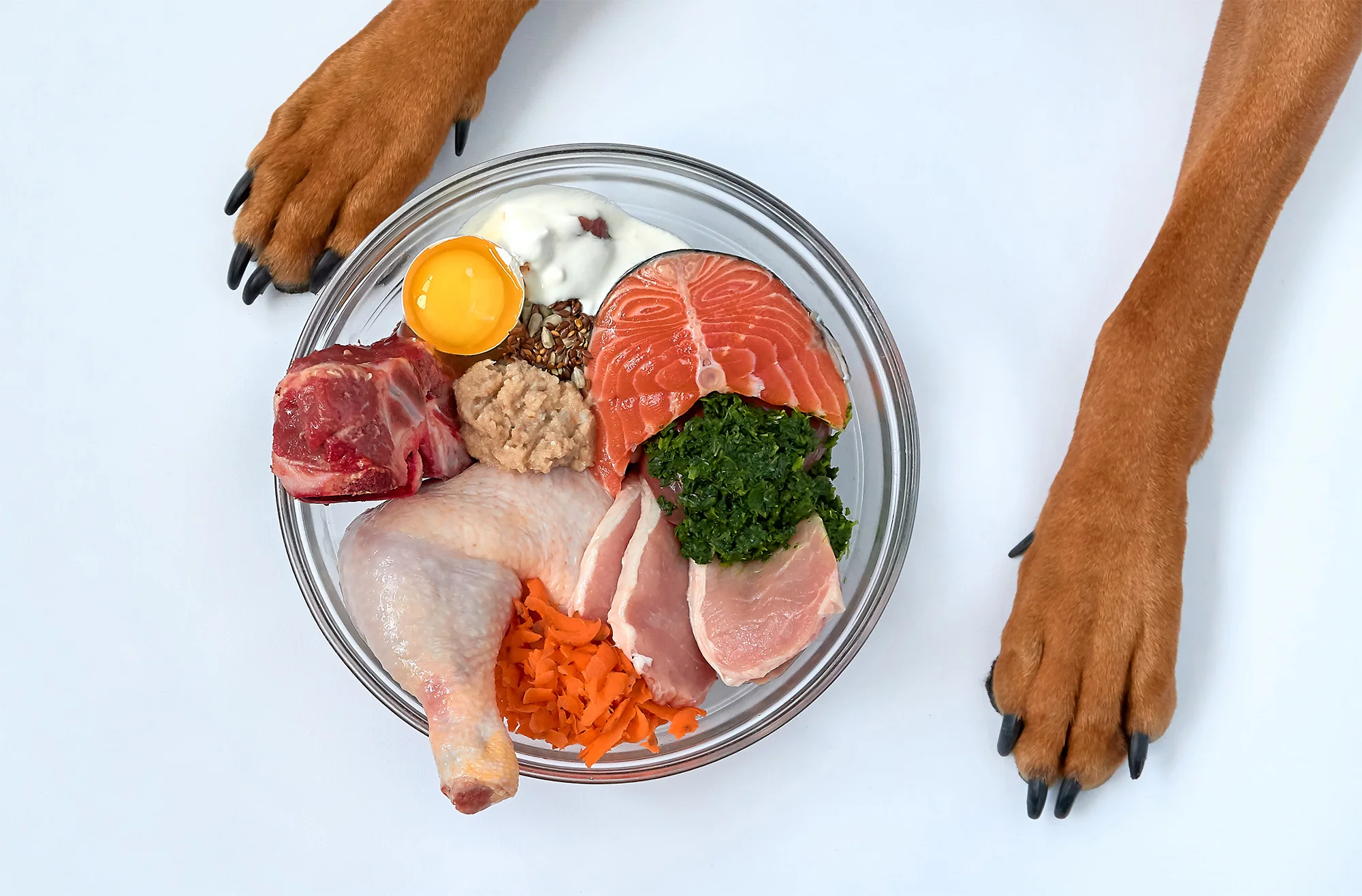
Protein plays a central role in canine nutrition. Nearly every biological function in a dog’s body — from muscle movement and immune responses to enzyme production and tissue repair — ultimately depends on amino acids derived from protein.
Dogs possess a digestive system that is well adapted to breaking down protein efficiently. Through stomach acid, specialized digestive enzymes, and intestinal absorption mechanisms, proteins are converted into amino acids that support the body’s metabolism.
Understanding how dogs digest protein provides insight into why protein quality and digestibility are fundamental considerations in canine nutrition.
Why Protein Is Essential for Dogs
Proteins are composed of smaller molecules known as amino acids, which serve as the building blocks of many structures within the body.
Protein contributes to several vital biological functions in dogs, including:
- muscle growth and maintenance
- enzyme production
- hormone regulation
- immune system function
- tissue repair and recovery
- skin and coat health
Certain amino acids are classified as essential amino acids, meaning a dog’s body cannot produce them internally and must obtain them through food.1
What Happens When a Dog Eats Protein
1. The Mouth: Mechanical Breakdown
Digestion begins when a dog bites into food. Dogs do not chew food extensively; their teeth are designed primarily to tear food rather than grind it.
Saliva in dogs contains very limited digestive enzymes, meaning that little protein digestion occurs in the mouth. Food moves quickly into the stomach where chemical digestion begins.
2. The Stomach: Acid and Pepsin Begin Digestion
The stomach is where the major phase of protein digestion begins.
Two important components drive this process:
- hydrochloric acid
- pepsin enzyme
Hydrochloric acid denatures protein molecules by unfolding their structure. The enzyme pepsin then breaks large protein molecules into smaller peptide chains.
Dogs possess a strongly acidic stomach environment, which helps them digest protein-rich foods efficiently.
3. The Small Intestine: Enzymatic Breakdown
After leaving the stomach, partially digested proteins move into the small intestine.
Pancreatic enzymes continue digestion, including:
- trypsin
- chymotrypsin
- carboxypeptidases
These enzymes break peptide chains into smaller peptides and individual amino acids.
4. Absorption of Amino Acids
The inner lining of the small intestine contains transport systems that absorb amino acids into the bloodstream.
Once absorbed, amino acids are used throughout the body for muscle repair, enzyme production, immune function, and metabolic regulation.
How Long Does It Take Dogs to Digest Protein?
Protein digestion begins within a few hours after a dog eats, but the complete digestive process takes longer as food moves through the gastrointestinal tract.
- initial stomach digestion: a few hours
- complete digestion and absorption: roughly 12–24 hours
Digestion time varies depending on meal size, protein source, fat content, and the dog’s metabolism.
Protein Digestibility in Dogs
Not all proteins behave the same way during digestion. Protein digestibility refers to how efficiently a dog’s body can break down protein and absorb its amino acids.
Digestibility depends on several factors including the protein source, amino acid composition, and how ingredients are processed.2
This is why nutrition is not simply about how much protein a food contains. It is also about how much of that protein the body can actually use.
Animal Protein and Plant Protein in Canine Digestion
Dogs can digest protein from many dietary sources including animal-derived ingredients such as chicken, fish, beef, lamb, and eggs, as well as plant-derived proteins found in ingredients like soy, peas, lentils, and grains.
Both can contribute protein to a dog’s diet. However, digestibility and amino acid balance may vary between ingredients. Animal proteins are often highly digestible and tend to provide a complete amino acid profile, while plant proteins can also contribute to canine nutrition depending on source, processing method, and overall diet formulation.345
This makes protein quality just as important as protein quantity.
How Much Protein Do Dogs Need?
Protein requirements vary depending on a dog’s age, activity level, and physiological state.
Guidelines from the Association of American Feed Control Officials (AAFCO) recommend minimum dietary protein levels of approximately:
- 18% protein for adult dogs
- 22% protein for growing puppies
Working dogs and highly active dogs may require higher protein intake.
The Myth: “Too Much Protein Is Harmful”
A common belief in dog nutrition is that high-protein diets damage a dog’s kidneys. Research indicates that healthy dogs are capable of metabolizing dietary protein efficiently.
Protein restriction is generally recommended only for dogs with certain medical conditions and should always be guided by a veterinarian.
Frequently Asked Questions
How do dogs digest protein?
Dogs digest protein through stomach acid and digestive enzymes such as pepsin, trypsin, and chymotrypsin. These enzymes break proteins into amino acids, which are then absorbed in the small intestine.
How long does it take dogs to digest protein?
Protein digestion begins within a few hours after a dog eats. Complete digestion and absorption usually takes between 12 and 24 hours depending on the meal composition and the dog’s metabolism.
Can dogs digest plant protein?
Yes. Dogs can digest protein from both animal and plant sources, although digestibility and amino acid balance can vary depending on the ingredient and how it is processed.
Is animal protein easier for dogs to digest than plant protein?
Animal proteins are often highly digestible and commonly provide a complete amino acid profile. Plant proteins can also support canine nutrition, but their nutritional value depends heavily on source, processing, and overall diet formulation.
Why is protein important for dogs?
Protein provides amino acids required for muscle maintenance, immune function, enzyme production, tissue repair, skin health, coat quality, and overall metabolic function.
References
-
Digestible indispensable amino acid scores and protein quality in dog diets
https://academic.oup.com/jas/article/100/11/skac279/6677535 -
Assessing dietary protein digestibility in veterinary nutrition
https://todaysveterinarypractice.com/nutrition/acvn-nutrition-notesthe-protein-paradigm-assessing-dietary-protein-in-health-disease/ -
Evaluation of high-protein diets differing in protein source in dogs
https://pmc.ncbi.nlm.nih.gov/articles/PMC10066725/ -
Investigation of digestibility of plant protein sources in dogs
https://www.mdpi.com/2076-2615/15/22/3279 -
Review of vegetarian and vegan diets for dogs
https://www.frontiersin.org/articles/10.3389/fvets.2025.1711695/full